
The words stem cell therapy tend to trigger one of two reactions. Either people get very excited because they have heard it described as some kind of medical revolution, or they get sceptical because it sounds like marketing language for something vague and unproven.
The truth, as usual, sits somewhere in between. Stem cell-based treatments for hair loss are real, increasingly well-supported by research, and genuinely effective for the right patients. But the term gets used loosely to describe a range of different things, and understanding what is actually happening in the treatment room matters if you want to make a proper decision.
What Stem Cell Therapy for Hair Loss Actually Means in Malaysia
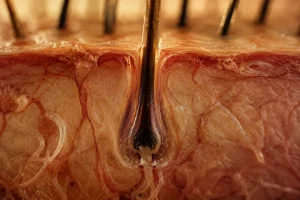
Stem cells are the body’s master cells: undifferentiated cells that can become many types of specialised tissue. In the context of hair loss, stem cells exist in the bulge region of hair follicles and play a central role in initiating the growth cycle.
When people talk about stem cell therapy for hair loss in a clinic setting, they are usually referring to one of two things. Our exosome hair treatment in Malaysia page covers the specific protocol, what to expect, and how it differs from PRP in practical terms.
The first is exosome therapy. Exosomes are tiny vesicles, essentially microscopic packages, that stem cells release to communicate with surrounding tissue. They carry a rich payload of growth factors, proteins, and genetic signals. When exosomes derived from stem cell cultures are applied to the scalp, they deliver those regenerative signals directly to follicles.
The second is treatments using Stromal Vascular Fraction (SVF) or adipose-derived stem cell extracts, where cells or cell-derived materials from fat tissue are processed and applied for regenerative effect. These are less common in Malaysian aesthetic clinics but are available in some specialized settings.
How Exosome Hair Therapy Works at the Follicle Level
Exosomes reach the follicle and release their contents into the surrounding tissue. The growth factors and signalling proteins they carry stimulate several processes simultaneously: increased blood vessel formation around the follicle, enhanced nutrient delivery, reduced inflammation, and direct activation of the follicle stem cells.
The key advantage over standard PRP is duration. PRP releases its growth factors in a relatively short burst. Exosomes, due to their fibrin-like matrix, deliver signals gradually over a period of several days. This sustained release is why clinical data suggests stronger and more consistent results than PRP in moderate to advanced hair thinning cases.
A 2025 clinical study reported approximately 80 percent of patients responding positively to exosome therapy with measurable increases in hair density within six months.
Who Is a Good Candidate for Stem Cell Hair Treatment
Stem cell-based treatments work best for patients who still have living follicles in the thinning areas, even if those follicles are producing very fine or weak hair. The treatment stimulates and strengthens what is already there.
Ideal candidates typically include men at Norwood Stage 2 through 4, women with diffuse thinning or early pattern hair loss, patients who have tried PRP with some response but want more significant results, and individuals post-hair-transplant who want to protect their remaining native hair.
For areas where follicles have been completely inactive for a significant period, stem cell therapy alone cannot restore coverage. A hair transplant would be needed to bring working follicles into those zones. Our hair transplant in Malaysia page explains when and how surgery becomes the appropriate next step alongside or after regenerative treatment.
Is Stem Cell Hair Therapy Better Than PRP
The honest answer is that they are not directly competing options. They exist on a spectrum.
PRP is accessible, well-researched, cost-effective, and effective for early hair loss. It uses your own biological material and carries an extremely low risk profile.
Exosome therapy is more advanced, delivers a broader and more sustained growth factor payload, and is particularly valuable when PRP has not produced sufficient results or when hair loss is more advanced. It is also useful for patients whose own blood quality may not yield strong PRP (due to health conditions or medications).
Many patients and clinics in KL now use both in combination, with PRP as a regular maintenance protocol and exosome therapy for more intensive treatment cycles. For a detailed view of how PRP is structured and who responds best to it, the PRP hair treatment page at Nexus Clinic has a clear breakdown.
What a Stem Cell Hair Treatment Session Involves
The session is non-surgical and relatively quick. Numbing cream is applied to the scalp beforehand. The exosome preparation, which is produced in a certified laboratory rather than drawn from your own blood, is prepared and administered through a series of micro-injections into the scalp.
Some clinics combine the injections with microneedling to enhance absorption and stimulate the scalp surface simultaneously.
The session typically takes 45 to 75 minutes. There is no significant downtime. Mild redness and scalp sensitivity may follow for 24 to 48 hours.
Results Timeline: What to Expect and When
Stem cell and exosome treatments work on a biological timeline, not an overnight one.
In the first month, most patients notice a reduction in the rate of shedding. Between months two and four, the follicles start responding more visibly as new, thicker growth becomes apparent. The most significant visible improvement in density is typically seen between months four and eight.
Unlike minoxidil, which needs daily application indefinitely, the results from stem cell-based protocols tend to be more durable because they work at a deeper biological level. That said, maintenance sessions are still recommended as hair loss is an ongoing process in most patients.
How Much Does Stem Cell Hair Treatment Cost in Malaysia
Exosome therapy in KL typically costs between RM 2,500 and RM 4,500 per session depending on the product used, the clinic, and whether it is combined with other treatments.
This is higher than PRP, which reflects the laboratory processing involved in producing the exosome preparation. However, some patients need fewer sessions to achieve equivalent results, which can make the overall cost competitive. For patients at earlier stages who want to start with a non-surgical approach, the full range of hair loss treatment options in Malaysia gives useful context on where each treatment fits.
A Note on Quality and Clinic Selection
Because exosome therapy involves externally-prepared biological materials, quality control matters enormously. Only clinics using certified, laboratory-tested preparations from reputable suppliers should be trusted with this treatment.
Always confirm that the clinic is licensed, that the treatment is administered by a qualified doctor, and that the exosome preparation used is sourced from a verified medical-grade supplier.
To start with a proper evaluation of where your hair loss sits and which treatment level makes sense, book a consultation at Nexus Clinic.
Frequently Asked Questions
Is stem cell hair therapy FDA approved?
Exosome therapy is not yet FDA-approved specifically for hair loss as a standalone indication, though the underlying technology has been evaluated in various clinical contexts. In Malaysia, treatments must comply with local MOH regulations, and reputable clinics only use certified products.
Does stem cell therapy hurt?
With proper scalp numbing, the discomfort is minimal. Most patients describe mild pressure during injections rather than pain.
How is stem cell therapy different from a hair transplant?
A hair transplant physically moves follicles from one area to another. Stem cell therapy stimulates and regenerates the existing follicles in place. They are different tools for different stages of hair loss.
Can stem cell therapy help after a hair transplant?
Yes. Post-transplant exosome or PRP sessions are increasingly used to improve graft survival and to protect native hair around the transplanted area.
How long do the results of exosome hair therapy last?
Results vary by individual, but many patients sustain meaningful improvement for 12 to 18 months after a course of treatment. Maintenance sessions help prolong the effect.
Are there any side effects of stem cell hair treatment?
Side effects are generally limited to temporary redness, mild swelling, and scalp sensitivity at the injection sites for 24 to 48 hours. Serious adverse effects are rare when treatments use properly certified preparations administered by licensed doctors.
How do I know if my follicles are still alive enough to respond?
A trichoscopy or dermoscopy examination by a hair specialist can assess follicle activity and miniaturization levels, which tells you whether regenerative therapy is likely to produce meaningful results.
Can exosome therapy treat complete baldness?
Complete baldness where follicles have been inactive for many years cannot be reversed by exosome therapy alone. Those areas require surgical transplantation to introduce working follicles.
How does stem cell therapy interact with medications like finasteride?
They are compatible. Finasteride addresses the hormonal cause of hair loss while stem cell therapy works at the cellular follicle level. Using both together is a common protocol for comprehensive hair retention.
Is stem cell hair therapy suitable for teenagers?
Hair loss treatment in general is typically not recommended for very young patients because the pattern has not yet stabilised. A doctor will assess whether treatment is appropriate on a case-by-case basis.