Everyone has an opinion on hair loss treatment. The shampoo brands have opinions. The supplement companies have opinions. Even your barber probably has opinions.
The problem is that most of these opinions are shaped by commercial interest rather than clinical evidence. So let us cut through the noise. Here is what the actual evidence says about the treatments available in Kuala Lumpur right now, who they suit, and what realistic outcomes look like.
First: Why Diagnosing the Type of Hair Loss Matters
Not all hair loss is the same. The most common type in Malaysia is androgenetic alopecia, which is genetic pattern hair loss. It follows predictable patterns in men (receding hairline and crown thinning) and more diffuse patterns in women.
But hair loss can also be caused by thyroid dysfunction, iron deficiency, hormonal changes (including PCOS and menopause), scalp conditions like seborrheic dermatitis, medication side effects, autoimmune responses (alopecia areata), and significant physical or psychological stress.
A treatment that works well for one type of hair loss may do nothing for another. This is why starting with a proper diagnosis matters more than starting with a popular treatment. Our hair loss treatment in Malaysia overview explains how we approach assessment and treatment planning at Nexus Clinic before recommending anything.
Medical Treatments: What the Evidence Shows
Minoxidil is the most widely used topical treatment for hair loss. It works by increasing blood flow to follicles and extending the growth phase of the hair cycle. Decades of studies have consistently shown it slows hair loss and produces some regrowth in patients with androgenetic alopecia. It requires daily application and results fade if use stops.
Finasteride is an oral medication that blocks the enzyme that converts testosterone to DHT (dihydrotestosterone), the hormone responsible for follicle miniaturisation in androgenetic alopecia. It is highly effective, with studies showing it halts progression in the majority of users and produces regrowth in many. It is prescription-only and has some potential side effects that a doctor will discuss during consultation. It is not prescribed for women who are pregnant or may become pregnant.
Both medications have the strongest evidence base of any non-surgical hair loss treatment. They are the foundation before adding anything else.
PRP Therapy: Effective With the Right Expectations
PRP (Platelet-Rich Plasma) has accumulated a meaningful body of clinical evidence over the past decade. Multiple randomised controlled trials have shown improvements in hair density, thickness, and growth phase duration in patients with androgenetic alopecia.
It works by concentrating growth factors from your own blood and delivering them directly to the follicle level via scalp injections. The result is a more favourable follicular environment.
PRP works best as a clinical complement to medical treatment, not a replacement for it. Patients using both minoxidil (or finasteride) and PRP show better outcomes than those using either alone. It is most effective at early to moderate hair loss stages where active follicles are still present. Our PRP hair treatment programme at Nexus Clinic is structured around a proper loading phase and tailored session schedule.
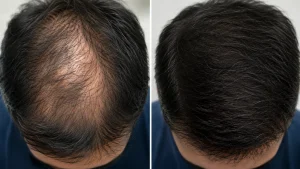
Results require a proper loading protocol of three to four sessions. Single session use is not evidence-based.
Exosome and Stem Cell-Based Therapy: The Newer Frontier
Exosome therapy is the most advanced regenerative option currently available at specialist clinics in KL. Where PRP uses growth factors from your own platelets, exosome preparations contain a broader spectrum of regenerative signals derived from stem cell cultures and deliver them over a more sustained timeframe.
The clinical evidence base is newer but growing. A 2025 study showed around 80 percent response rates with measurable density improvement at six months. It is particularly valuable for patients who have not achieved sufficient results with PRP or are at a stage where more intensive regenerative intervention is appropriate.
Exosome therapy does not replace surgery for areas with significant follicle death, but it represents a meaningful step forward in the non-surgical treatment of moderate to advanced active hair loss. Full details on how this works are covered on our exosome hair treatment in Malaysia page.
Hair Transplant Surgery: The Only Permanent Option for Bald Areas
For areas of the scalp where follicles have been inactive for years and no regenerative approach will restore them, surgery is the answer. A hair transplant relocates genetically resistant follicles from the donor zone to the affected area, producing permanent hair growth that no medication or injection-based treatment can deliver.
FUE is the dominant technique in KL. Results are permanent. The procedure is surgical and requires a recovery period.
The important caveat is that a transplant restores coverage in treated areas but does not stop ongoing hair loss in untreated native hair. Combining surgery with ongoing medical management is standard practice for the best long-term outcomes. Our hair transplant in Malaysia guide covers when surgery is appropriate and what to expect from the process.
Mesotherapy for Hair: Useful as a Supporting Treatment
Mesotherapy involves injecting vitamins, minerals, and amino acids directly into the scalp mesoderm layer, bypassing digestive absorption and delivering nutrients directly to the follicle.
The evidence base is less robust than for PRP or medications, but clinical experience suggests it is useful as a supporting treatment, particularly for hair loss associated with nutritional deficiency or scalp stress. It is commonly used in combination protocols rather than as a standalone treatment.
Minoxidil Injections: Growing in Popularity in KL
Topical minoxidil applied daily is the standard form, but injected minoxidil directly into the scalp is gaining traction at some KL clinics. The principle is similar to mesotherapy: bypassing topical limitations and delivering the active compound directly where it is needed.
Early clinical data is promising. This may become a more established option over the coming years as more data accumulates.
Low Level Laser Therapy: Real Effect, Realistic Expectations
Low level laser therapy (LLLT) using certain wavelengths stimulates mitochondrial activity in follicles. FDA-cleared devices exist, and the evidence shows modest but measurable benefits for early to moderate androgenetic alopecia.
It is generally used as part of a broader multi-modal protocol rather than as a primary treatment. Home-use devices are available but clinical-grade equipment at proper clinics delivers more meaningful results.
What the Best Treatment Plan Actually Looks Like
Optimal management of hair loss is rarely about one treatment. The best outcomes in KL typically involve a layered approach: medical treatment with minoxidil and or finasteride as the foundation, PRP or exosome therapy as a clinical enhancement, and surgery if and when it becomes the appropriate next step.
Book a consultation at Nexus Clinic to get a proper diagnosis and treatment plan based on your specific hair loss pattern.
Frequently Asked Questions
Which hair loss treatment works fastest in KL?
Minoxidil typically produces visible results within three to four months when used consistently. PRP results develop over a similar period. Hair transplant results require 9 to 12 months for full assessment. There is no instant treatment for hair loss.
Is hair loss treatment covered by health insurance in Malaysia?
In most cases, no. Hair loss treatments are classified as elective and are not covered by standard health insurance policies. Some group medical insurance plans cover hair loss treatment when it is secondary to a diagnosed medical condition. Check your specific policy.
Can hair loss be reversed completely?
It depends on the type and stage. Temporary hair loss from stress, nutritional deficiency, or hormonal events often reverses once the underlying cause is addressed. Genetic androgenetic alopecia cannot be reversed in areas of complete follicle death but can be significantly improved in active thinning areas with appropriate treatment.
Is PRP better than finasteride for hair loss?
They work through different mechanisms and are not direct alternatives. Finasteride addresses the hormonal cause at a systemic level. PRP addresses the follicular environment locally. Many patients benefit from using both together, and results with the combination tend to be stronger than either alone.
How do I know if my hair loss is genetic or caused by something else?
A doctor can assess this through a combination of scalp examination, medical history, and blood tests. Nutritional deficiencies, thyroid function, hormone levels, and iron status can all contribute to hair loss and are worth investigating before assuming the cause is purely genetic.
What is the best hair loss treatment for women specifically?
Women generally respond well to topical minoxidil and PRP. Finasteride is used in some cases but with specific precautions. The approach depends heavily on the type of hair loss, hormonal factors, and whether nutritional or thyroid issues are contributing. A thorough medical assessment is essential.
Can I treat hair loss without medication?
PRP and laser therapy offer non-pharmaceutical options. However, the clinical evidence for medications is stronger and most doctors recommend them as part of the foundation treatment plan. Avoiding medication entirely limits what is achievable.
How long will I need to continue treatment?
For genetic hair loss, treatment is a long-term commitment. Stopping medication causes hair loss to resume. PRP maintenance sessions sustain results. The goal is long-term management rather than a fixed-duration cure.
Are there any treatments that work for alopecia areata specifically?
Alopecia areata is an autoimmune condition and requires different treatment from androgenetic alopecia. Corticosteroid injections, immunosuppressants, and JAK inhibitors (including some recently approved options) are the primary medical approaches. PRP has shown some benefit in certain cases. A dermatologist assessment is essential.
What lifestyle changes can support hair loss treatment?
Adequate protein intake, good iron and zinc levels, stress management, scalp hygiene, and avoiding aggressive hairstyling all support treatment outcomes. These are supporting factors, not standalone solutions, but they genuinely matter.