A hair transplant is one of the most significant decisions you will make about your appearance. It is also one of the few cosmetic treatments that can genuinely change your life if done well, and genuinely frustrate you if done poorly.
The good news is that Malaysia has established itself as a serious destination for high-quality hair transplant surgery, with skilled doctors, modern facilities, and pricing that is highly competitive compared to the UK, Australia, or the US. But not all clinics or practitioners are equal, and understanding exactly what separates a good outcome from a bad one matters before you book anything.
What a Hair Transplant Actually Does
A hair transplant does not create new hair. It relocates hair from areas of your head where it is genetically resistant to hair loss (usually the back and sides of the scalp, known as the donor zone) to areas that are thinning or bald.
The principle behind this is called donor dominance. Hair follicles from the permanent zone retain their genetic resistance to DHT (dihydrotestosterone, the hormone responsible for pattern hair loss) even after being moved. So once transplanted, those hairs continue to grow in their new location for life.
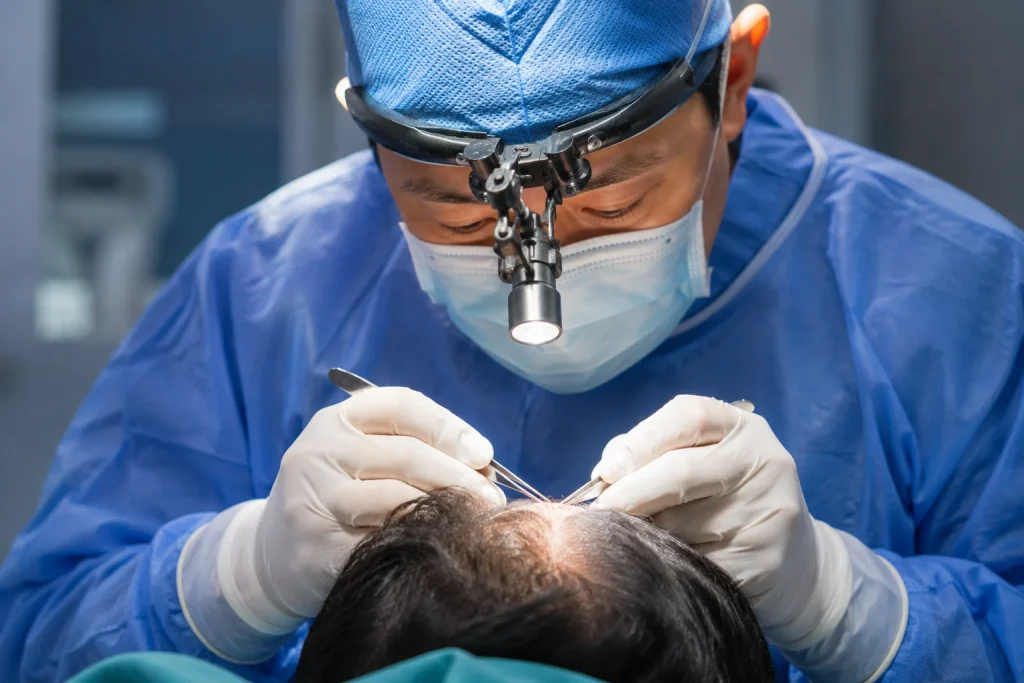
The procedure is surgical. It is done under local anaesthesia, meaning you are awake throughout but feel no pain in the scalp. Most sessions take anywhere from four to eight hours depending on the number of grafts being transplanted.
FUE vs FUT: The Techniques Available in Malaysia
Two main surgical methods exist. FUT (Follicular Unit Transplantation) involves removing a strip of scalp from the donor area and dissecting it into individual grafts. It leaves a linear scar but allows the largest number of grafts to be harvested in one session.
FUE (Follicular Unit Extraction) is the dominant technique in Malaysia today. Individual follicular units are extracted one by one using a micro-punch tool, typically 0.7mm to 0.9mm in diameter. No linear scar is left, though tiny round marks from extraction sites are present in the donor area and fade over time.
Within FUE, further variations exist. Sapphire FUE uses gemstone-tipped blades for incision, allowing smaller, more precise channels. DHI (Direct Hair Implantation) uses a specialized pen-like device called a Choi implanter that inserts follicles directly without pre-made channels, allowing higher density placement and less time outside the body for grafts. For a full breakdown of what FUE specifically involves at each stage from consultation to recovery, our FUE hair transplant Malaysia guide covers it in detail.
Each technique has its optimal applications. Your doctor will recommend the most appropriate based on your specific case.
Hair Transplant Cost in Malaysia 2026
| Technique | Cost Per Graft | Best Suited For |
|---|---|---|
| Standard FUE | RM 6 to RM 12 | Most hair loss patterns, cost-effective option |
| Sapphire FUE | RM 8 to RM 14 | Precise channel creation, reduced scarring |
| DHI Direct Hair Implantation | RM 12 to RM 18 | High density placement, hairline and crown work |
What Affects the Total Graft Count You Need
| Hair Loss Extent | Estimated Graft Count | Approximate Total Cost (Standard FUE) |
|---|---|---|
| Minor hairline recession | 1,500 to 2,000 grafts | RM 9,000 to RM 24,000 |
| Crown restoration | 2,000 to 3,000 grafts | RM 12,000 to RM 36,000 |
| Hairline and crown combined | 3,500 grafts and above | RM 21,000 and above |
What Makes a Transplant Successful
This is where most conversations about hair transplants fall short. People focus on the graft count and the price. What actually determines the outcome is far more nuanced.
Hairline design is critical. A transplant that creates an unnaturally straight, perfectly symmetrical hairline will look artificial. A skilled surgeon designs a hairline that matches your facial proportions, age, and natural growth patterns with irregular micro-variations that mimic how real hair grows.
Graft survival rate matters enormously. From the moment grafts are harvested to when they are implanted, they are vulnerable. Excellent surgical teams minimise time outside the body and maintain grafts in optimal conditions. The best clinics report graft survival rates above 90 to 95 percent.
Angle and direction of implantation determines whether transplanted hair lies naturally against the scalp or sticks out at an odd angle. This is a technical skill that takes years to develop.
Finally, realistic expectations matter. A transplant redistributes existing hair. It does not create more hair than you have. A good surgeon will tell you honestly whether your donor zone can produce the coverage you are hoping for.
The Recovery Process: What Happens After Surgery
The first 24 to 72 hours involve some swelling around the forehead, mild scalp tenderness, and small crusts forming at the graft sites. Sleep position matters during this period, and your doctor will give specific instructions.
Between weeks one and four, the transplanted hairs will shed. This is completely normal and expected. The follicles are going into a resting phase before they begin producing new hair.
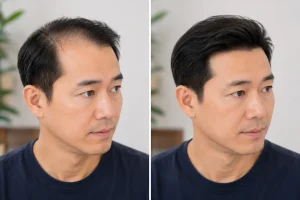
Visible new growth typically appears around months three to four. The final result, with full density and length visible, is usually assessed at 12 months post-procedure.
Protecting the scalp from direct sun during the first month and following your doctor’s aftercare protocol are essential for graft survival. Many patients also continue PRP hair treatment sessions in KL after their transplant to protect native hair and sustain overall scalp health.
How to Choose the Right Clinic in Malaysia
Look for a clinic where the procedure is performed by a licensed doctor registered with the Malaysian Medical Council and ideally with membership in the International Society of Hair Restoration Surgery (ISHRS). Ask to see before and after results from their own patients, specifically cases similar to your hair loss pattern.
Be cautious of significantly below-market pricing. Transplants done by unlicensed technicians or in poorly regulated settings carry serious risks including infection, uneven results, and graft failure. For patients at earlier stages who want to understand the full treatment spectrum before deciding on surgery, our hair loss treatment overview covers all available options in KL.
To get an honest assessment of your candidacy and understand exactly what the procedure and recovery involves, book a consultation at Nexus Clinic.
Frequently Asked Questions
Is a hair transplant permanent in Malaysia?
Yes. Transplanted follicles from the donor zone are genetically resistant to DHT and continue growing hair for life once established. However, native non-transplanted hair may still continue to thin over time, which is why ongoing medical management is often recommended alongside surgery.
How old do I need to be to get a hair transplant in Malaysia?
Most qualified doctors prefer patients to be in their late twenties or older so the hair loss pattern has had time to stabilise. Transplanting too early risks needing revision work later as surrounding hair continues to thin.
Does a hair transplant leave scars?
FUE leaves tiny round dot-like marks in the donor area that fade significantly and are generally not visible with normal hair length. FUT leaves a linear scar but this can be concealed with appropriate hair length.
Can women get hair transplants?
Yes, though the approach differs from male pattern cases. Women with localised thinning, frontal hairline recession, or traction alopecia are suitable candidates. Diffuse female pattern hair loss requires careful evaluation.
What is graft survival rate and why does it matter?
Graft survival refers to the percentage of transplanted follicles that successfully establish and produce hair. The best clinics achieve above 90 percent. Poor technique, excessive time outside the body, or suboptimal implantation angles can reduce this significantly.
How many grafts do I need for my hairline?
A hairline receding from Norwood Stage 2 to 3 typically requires 1,500 to 2,500 grafts. Your surgeon will calculate this based on your specific measurements and desired density during consultation.
Can I go back to work the next day after a hair transplant?
Many patients return to desk work within 2 to 3 days. Physical labour or strenuous exercise should be avoided for at least 2 weeks. Your surgeon will give specific guidance based on your job type.
Will the results look natural?
When performed by a skilled surgeon using modern FUE technique with proper hairline design and angle control, results are virtually undetectable as transplants. The key is choosing a surgeon who prioritises aesthetics as much as graft survival.
What happens if I need more grafts later?
Depending on how much donor hair remains and how your native hair continues to thin, a second procedure may be possible in future. This is why doctors emphasise not over-harvesting the donor zone in the first session.
Is the procedure painful?
The local anaesthesia injections are the most uncomfortable part. Once the scalp is fully numb, the extraction and implantation process is not painful. Most patients find the long sitting time more of a challenge than any physical discomfort.