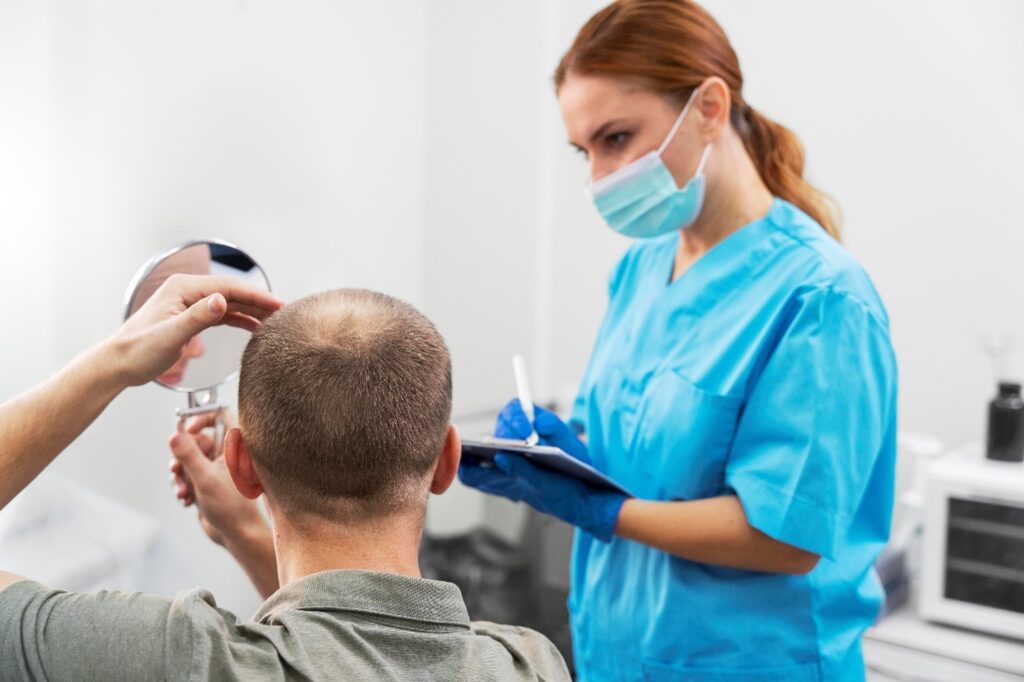
You have been staring at your hairline for weeks. Maybe months. You have tried every shampoo the pharmacy stocks and you are still losing ground. So now you are at the stage where real treatment feels necessary, and two options keep coming up everywhere: PRP therapy and hair transplant surgery.
Both are legitimate. Both have real science behind them. But they solve different problems at different stages of hair loss, and choosing the wrong one wastes your money, your time, and your hope.
This guide breaks down exactly what each treatment does, who it actually helps, what it costs in Malaysia, and how to figure out which one makes sense for where your hair loss is right now.
What Is PRP Hair Treatment and How Does It Work
PRP stands for Platelet-Rich Plasma. Your doctor draws a small amount of your blood, spins it in a centrifuge machine to separate and concentrate the platelets, and then injects that concentrated plasma directly into your scalp.
Why does that matter? Platelets carry growth factors, and growth factors are the biological signals that tell dormant or weakened hair follicles to wake up and start producing hair again. Think of it as delivering a concentrated nutrition shot to roots that have been struggling.
It does not create new follicles from nothing. What it does is revive follicles that are still alive but underperforming. That is why timing matters. The sooner you start, the more follicles you can save.
PRP works best for people experiencing early to moderate hair thinning. It is also commonly combined with hair transplant procedures to improve graft survival rates after surgery. Our PRP hair treatment programme in Malaysia walks through the full session structure, pricing, and what the loading phase involves for your specific pattern of hair loss.
What Is a Hair Transplant and How Does It Work
A hair transplant is a surgical procedure that physically moves healthy hair follicles from a donor area (usually the back and sides of your head, which are genetically resistant to hair loss) to areas that are thinning or bald.
The most common technique in Malaysia today is FUE, which stands for Follicular Unit Extraction. Instead of removing a strip of scalp, the surgeon uses a tiny punch tool to harvest individual follicles one by one. There are no linear scars, and recovery time is much shorter than older methods.
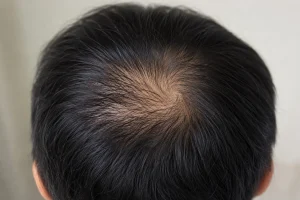
Once transplanted, these follicles continue to grow hair for life because they carry the genetic resistance of the donor area. The results are permanent. For a full breakdown of what this procedure involves step by step, our FUE hair transplant guide for Malaysia is worth reading before any consultation.
The Key Difference You Need to Understand
Here is the honest version of how to think about this:
PRP saves hair you are losing. A hair transplant replaces hair you have already lost.
If you are in early or moderate stages of hair loss and your follicles are still active, PRP can significantly slow or reverse that loss. It cannot fill in large bald areas because there are no surviving follicles there to wake up.
If you have significant bald patches where the follicles have been dead for years, PRP alone will not restore coverage in those areas. A transplant moves working follicles into those zones and gives you permanent hair growth.
Many patients in Malaysia actually use both. They have a transplant to fill bald areas and maintain PRP sessions to protect the native hair that remains.
PRP Hair Treatment Cost in Malaysia 2026
A single PRP session in Malaysia typically costs between RM 600 and RM 1,500 depending on the clinic, the technology used, and whether the clinic is in Kuala Lumpur or elsewhere.
Most doctors recommend starting with a loading phase of three to four sessions spaced about a month apart, then moving to maintenance sessions every six to twelve months.
A three-session package in KL generally runs between RM 2,500 and RM 4,500. Penang and Johor Bahru clinics tend to price slightly lower.
Hair Transplant Cost in Malaysia 2026
Hair transplant pricing is based on graft count rather than a flat fee. Standard FUE in Malaysia typically costs between RM 6 and RM 12 per graft, while more advanced DHI techniques run RM 12 to RM 18 per graft.
Most patients need between 2,000 and 4,000 grafts depending on the extent of hair loss, which puts the total cost between RM 8,000 and RM 30,000 for most cases. Premium KL clinics using robotic or sapphire precision techniques may price higher. Our hair transplant in Malaysia overview includes a full breakdown of what those pricing differences reflect.
Who Should Choose PRP
PRP is the right starting point if you are at Norwood Stage 1, 2, or early Stage 3 on the male pattern baldness scale. This means you have noticeable thinning but your scalp still has active follicles across the affected areas.
It also suits people who are not ready for surgery, prefer a non-invasive approach, or want to slow hair loss while monitoring whether more intervention becomes necessary.
Women experiencing diffuse thinning, hormonal hair loss, or post-pregnancy shedding often see excellent results with PRP. For a broader view of non-surgical alternatives alongside PRP, our hair loss treatment overview covers the full range available in KL.
Who Should Choose a Hair Transplant
A transplant makes sense once follicles in certain areas are completely inactive and no regenerative treatment will bring them back. If you have bald patches at the crown or a significantly receded hairline with clear scalp showing, surgery is the path to restoring coverage.
Age matters too. Doctors in Malaysia generally advise waiting until your hair loss pattern has stabilized, usually in your late twenties or beyond, before committing to transplant surgery. This prevents situations where native hair continues to thin around a transplanted area later.
Can You Do Both PRP and a Hair Transplant
Yes, and many patients do. Surgeons often apply PRP during a transplant procedure to improve follicle survival. After surgery, continued PRP sessions help protect the existing non-transplanted hair that might otherwise keep thinning.
If you are early in the hair loss process, starting with PRP and only progressing to a transplant if necessary is a medically sound approach.
How to Know Which One Is Right for You Right Now
The honest answer is that you need a proper scalp assessment from a qualified doctor before deciding anything. Both treatments produce very different results depending on your hair loss type, pattern, severity, and how long it has been progressing.
At Nexus Clinic, our doctors use a structured evaluation before recommending any hair treatment. No pressure, no assumptions, just a clear picture of where your hair is now and what makes sense next.
At Nexus Clinic, our doctors use a structured evaluation before recommending any hair treatment. No pressure, no assumptions, just a clear picture of where your hair is now and what makes sense next. Book a hair consultation at Nexus Clinic and get a clear answer based on your actual scalp condition.
Frequently Asked Questions
Is PRP hair treatment painful?
Most patients describe PRP scalp injections as mild discomfort rather than pain. Numbing cream is usually applied beforehand, making the procedure quite tolerable for most people.
How many PRP sessions will I need?
The standard recommendation is three to four initial sessions spaced about four weeks apart. After that, a maintenance session every six to twelve months helps sustain the results.
How long does a hair transplant take to show results?
Transplanted hair typically sheds within the first few weeks, which is completely normal. New growth begins around three to four months, with fuller visible results appearing between nine and twelve months after surgery.
Can PRP stop hair loss permanently?
PRP is not a permanent cure. It significantly slows hair loss and can stimulate regrowth in weakened follicles, but once sessions stop, the underlying condition can resume. Many patients maintain ongoing sessions to keep results going.
Will a hair transplant look natural?
When performed by a skilled doctor using FUE technique, modern hair transplants are virtually undetectable. The key is hairline design and the angle at which follicles are placed, which good surgeons plan carefully to match your natural growth pattern.
Is there a minimum age for a hair transplant in Malaysia?
Most qualified doctors prefer to wait until a patient is at least 25 to 28 years old so the hair loss pattern has had time to stabilize. Transplanting too early risks needing revision work later as surrounding hair continues to thin.
What is the difference between FUE and DHI hair transplant?
FUE harvests follicles and then implants them using a separate tool. DHI uses a specialized pen-like device (Choi implanter) to insert follicles directly, allowing tighter placement and potentially higher density. DHI typically costs more.
Can women get PRP hair treatment?
Yes. PRP is very effective for women experiencing androgenetic alopecia (female pattern hair loss), hormonal thinning, and diffuse shedding. The approach is essentially the same as for men.
What happens if I stop PRP sessions?
Results gradually fade over time if sessions stop, as the underlying causes of hair loss continue. This is why doctors recommend a long-term maintenance schedule rather than treating PRP as a one-off fix.
Does insurance cover hair transplants or PRP in Malaysia?
Both treatments are generally classified as elective cosmetic procedures and are not covered by standard health insurance in Malaysia. Many clinics offer installment plans at zero percent interest to make treatment more accessible.