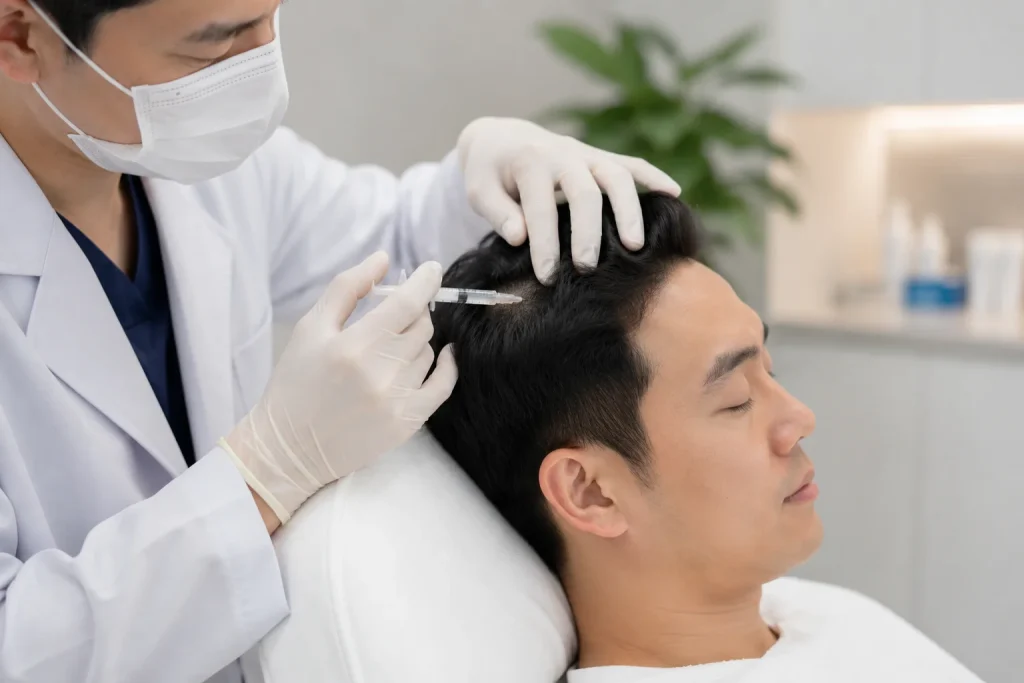
A few years ago, PRP was something you mainly heard about in sports injury recovery. Professional athletes using their own blood to heal faster. It sounded intense and medical and very far from everyday life.
Today it is one of the most commonly requested treatments at aesthetic clinics across Kuala Lumpur and major cities throughout Malaysia. And the people walking through those doors are not just athletes. They are office workers noticing their hair thinning, parents dealing with post-pregnancy shedding, young professionals trying to get ahead of ageing skin.
So what changed? And what does PRP actually do that makes it worth choosing?
The Appeal of Using Your Own Biology
The central reason PRP has found such a broad audience in Malaysia is that it uses something you already have. There are no foreign substances, no synthetic chemicals, no materials that could trigger an allergic reaction. It is your own blood, processed to concentrate the most useful part of it, and put back to work exactly where it is needed.
In a market where patients are increasingly cautious about what goes into their bodies, that is genuinely compelling. It also means the safety profile is very strong. The risk profile of PRP is fundamentally different from treatments involving synthesised compounds or materials sourced externally.
Malaysia’s Climate and Hair Loss
One factor that gets overlooked in most global hair loss discussions is how Malaysia’s climate specifically affects scalp health. The combination of year-round heat, high humidity, and urban pollution creates conditions where excess sebum production, follicular inflammation, and scalp stress are significantly more common than in temperate climates.
This means Malaysian hair loss patients often deal with a combination of genetic predisposition and environmental scalp stress. PRP addresses both the follicular level (stimulating and strengthening roots) and the scalp environment (increasing blood vessel density and cellular activity in the surrounding tissue). If you want to see what a full non-surgical hair loss programme looks like in this context, our hair loss treatment options at Nexus Clinic gives a complete picture.
Hair Loss in Malaysia Is More Common Than People Admit
There is still a degree of social reluctance around openly discussing hair loss in Malaysia. Men particularly tend to frame it as something to accept rather than treat. But attitudes are changing, and the numbers tell their own story.
Androgenetic alopecia, the genetic form of hair loss, affects approximately 50 percent of men by age 50 globally, with similar figures observed in Malaysian populations. Among women, diffuse thinning from hormonal shifts, postpartum changes, and stress-related shedding affects a significant proportion of women in their 30s and 40s.
The growing willingness to seek clinical help rather than just switching shampoos reflects both better public awareness and the availability of effective non-surgical options like PRP.
PRP for Hair: What the Treatment Addresses
At its core, PRP hair treatment addresses two things simultaneously. First, it slows ongoing hair loss by improving the health of the scalp environment and the function of existing follicles. Second, it stimulates thicker, stronger regrowth in follicles that have been producing weak or fine hair.
It is particularly effective in the following scenarios: early to moderate androgenetic alopecia in both men and women, post-pregnancy hormonal shedding, hair thinning associated with nutritional deficiency or stress, and maintenance of hair density after a transplant procedure to protect native hair. Our PRP hair treatment at Nexus Clinic is administered by qualified doctors in a fully licensed clinic setting, with a structured session plan tailored to your hair loss pattern.
PRP for Skin: The Other Reason People Are Coming In
It is worth noting that many patients who come to Nexus Clinic for PRP hair treatment end up learning about PRP’s applications for skin as well, because the mechanism is exactly the same. Growth factors stimulate collagen production, improve tissue healing, and enhance cellular renewal.
For skin, PRP is applied differently, typically through micro-injections or combined with microneedling to treat fine lines, acne scarring, uneven texture, and skin lassitude. It is particularly popular among Malaysians dealing with the textural damage that comes from years of sun exposure in a tropical climate.
What a PRP Session Actually Feels Like
People imagine the blood draw and the needle and assume it is an ordeal. The reality is considerably more routine than that.
A small amount of blood is drawn from your arm, similar to a standard blood test. It goes into the centrifuge for about ten minutes while numbing cream is applied to your scalp. Once the PRP is ready and the area is numb, the injections themselves take around twenty to thirty minutes.
Most patients describe a mild pressure sensation. Redness on the scalp or skin usually clears within a few hours. You can go about your day normally afterwards.

How Many Sessions Do You Actually Need
The loading phase for hair treatment is typically three to four sessions spaced a month apart. After that, a maintenance session every six to twelve months keeps results stable.
The skin protocol varies depending on the indication. Acne scarring, for example, usually benefits from three to six sessions. General skin rejuvenation may need fewer.
Results in both hair and skin develop gradually over weeks and months as the biological processes take effect. This is not a treatment where you leave the clinic looking dramatically different. The change happens underneath the surface first, and then becomes visible over time. For patients weighing PRP as a first step before deciding whether surgery is eventually needed, our hair transplant in Malaysia page explains when surgery makes sense as a next step.
Why the Demand Is Growing
The demand for PRP in Malaysia is growing for a straightforward reason. It works, it is safe, and it fits what a lot of people are looking for: something that uses natural mechanisms, does not require surgery, and fits into a normal schedule without significant downtime.
As awareness improves and more qualified clinics offer it to the proper clinical standard, more people are discovering that the things they had been quietly worried about have effective solutions available to them. For patients who want to go further than PRP, exosome hair treatment in Malaysia is the next level of regenerative therapy worth exploring.
To get a proper picture of which approach suits your specific needs, book a consultation at Nexus Clinic and let a doctor assess your hair and scalp before recommending anything.
Frequently Asked Questions
Is PRP popular in Malaysia specifically or globally?
PRP has become globally popular, but Malaysia’s medical tourism infrastructure and the high concentration of qualified aesthetic clinics in KL have made it particularly accessible and affordable compared to Western markets.
How soon after a PRP session can I wash my hair?
Most doctors advise waiting at least 24 hours before washing the scalp to allow injection sites to settle fully.
Can PRP cause hair to fall out temporarily?
Some initial shedding following a session is normal and usually resolves quickly. It reflects the hair cycle resetting and does not indicate that the treatment is failing.
What type of specialist should administer PRP?
A licensed aesthetic doctor or dermatologist registered with the Malaysian Medical Council. PRP should never be administered outside a licensed medical clinic.
Does diet affect PRP results?
Yes. Good nutrition, particularly adequate protein, iron, zinc, and biotin, supports follicle health and can improve how well your body responds to PRP. Your doctor may recommend addressing any nutritional gaps before or during treatment.
Is there an age limit for PRP hair treatment?
There is no strict upper age limit, but older patients with more advanced follicle loss respond less dramatically than younger patients with more active follicles. A doctor assessment will clarify what is realistic for your specific situation.
Can I combine PRP with hair growth supplements?
Yes. PRP and supplements are not mutually exclusive. Many doctors recommend a good hair-supporting supplement protocol alongside clinical treatment for better overall results.
How does PRP compare to mesotherapy for hair loss?
Both target follicle stimulation. PRP uses concentrated growth factors from your own blood while mesotherapy uses an injected vitamin and mineral cocktail. PRP has a stronger clinical evidence base, though mesotherapy has its own applications and some clinics use both together.
Is there bruising after PRP injections?
Bruising is uncommon in scalp injections due to the technique used. It is more possible with facial PRP, particularly around delicate areas like under the eyes, but typically resolves within a few days.
Do I need to stop any medications before PRP?
Anti-inflammatory medications like aspirin or ibuprofen can interfere with platelet function and should generally be paused for a few days before a session. Always disclose all medications during your consultation.